







Led by Professor Alex Mullen at the University of Nottingham, the project has been awarded £1.4 million in funding from UK Research and Innovation (UKRI). It will explore how the voices of Britain sounded during and after the Roman period, examining how early British communities constructed and represented their identities, and how they engaged with their neighbours overseas.
This ambitious four-year project, starting in October 2026, will transform understanding of how communities in Britain expressed identity through language, inscriptions, and cultural practices from the century before Roman rule to the 7th century AD.
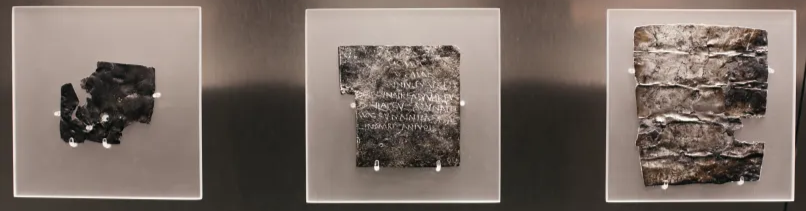
The partnership builds on an existing collaboration with the project team working on the Roman Inscriptions of Britain Online resource, which recently incorporated the internationally significant collection of curse tablets from The Roman Baths. The team will play a central role in reassessing this collection, enabling a full scientific and epigraphic study of both inscribed and uninscribed tablets within the wider context of Romano-British epigraphy.
Many of these tablets have never been fully published or scientifically analysed, making this project a landmark opportunity to unlock new insights into Britain’s ancient past and the ways its early communities constructed and represented their identities.
Amanda Hart, Director of Archaeology and Art at the Roman Baths Museum, said:
“We are thrilled to collaborate with Professor Mullen and her team. This project offers a unique opportunity to reanimate our curse tablet collection using cutting-edge imaging and AI technologies, while also reimagining how we present Roman voices to our visitors. It will allow us to challenge established narratives and bring the people of Aquae Sulis to life in new and engaging ways.”
The research findings aim to improve the interactive visitor experience by creating a new display focused on curses. This display will utilise new digital technologies to bring people of Roman Britain to life and provide insights into the diverse identities of Roman Britain.
